
Taylor Brooks · 8 October 2026
Exploring Encryption Standards for Secure Note Sharing in Remote Corporate Teams
Remote corporate teams rely on digital note sharing platforms to exchange sensitive project details, meeting summaries, and strategic documents, yet these exchanges demand robust encryption to prevent unauthorized access during transmission and storage. Standards such as AES-256 provide symmetric encryption that converts plaintext into ciphertext through multiple rounds of substitution and permutation, while RSA handles asymmetric key exchanges that allow secure distribution of session keys without exposing private components. Organizations integrate these protocols into note applications to ensure data remains protected even when accessed from various global locations.
Core Encryption Protocols in Use
Researchers at government agencies track the adoption of FIPS 140-2 validated modules, which certify cryptographic implementations for federal and commercial applications alike, and data from these evaluations shows consistent preference for AES variants in enterprise note systems. End-to-end encryption models keep keys solely with end users, so service providers cannot decrypt content on their servers, a setup that aligns with requirements from multiple regulatory frameworks across regions. TLS 1.3 further secures network channels by enforcing forward secrecy, meaning each session generates unique keys that render past communications unreadable if long-term keys later become compromised.
Implementation often combines these layers, where a note platform first applies AES for content encryption before wrapping the result in TLS for transit, and this approach reduces exposure points during file synchronization across distributed devices. Studies from academic institutions indicate that hybrid systems cut breach risks substantially when compared with single-protocol setups, because attackers must overcome sequential barriers rather than one isolated defense.
Application in Distributed Workflows
Corporate environments schedule daily note updates that travel between team members in different time zones, and encryption standards ensure integrity checks accompany each transfer to detect any tampering attempts mid-route. Tools built around zero-knowledge architectures require users to manage their own keys, which prevents server-side access while still permitting collaborative editing through secure multi-party computation techniques. Observers note that this model supports compliance audits because logs record only encrypted metadata rather than readable content.
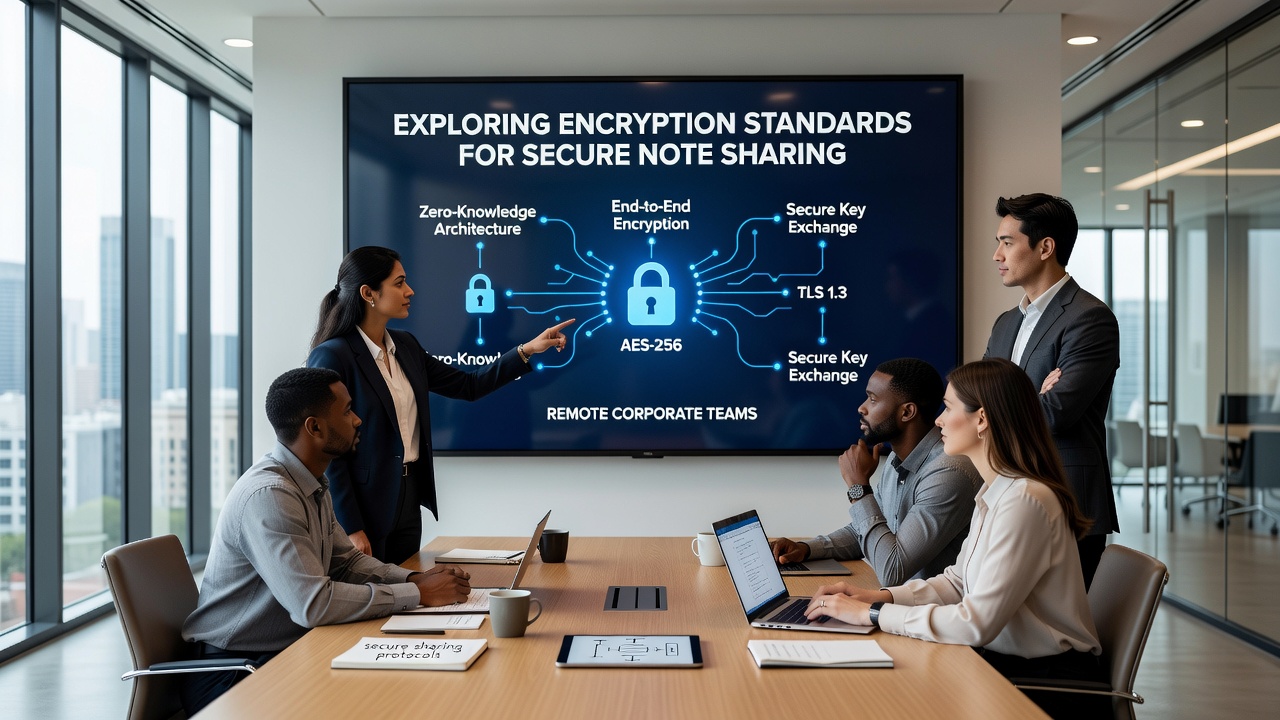
October 2026 brings continued evolution in these standards, as updates to international guidelines emphasize post-quantum cryptography preparations that address potential threats from emerging quantum computing capabilities. Teams testing these forward-looking algorithms report smoother integration when platforms already support modular swaps between current and experimental ciphers.
Regulatory Alignment and Geographic Variations
Entities operating under GDPR provisions in the European Union must demonstrate that encryption meets adequacy standards for cross-border transfers, while similar mandates from Canadian authorities require documented key management practices for personal data handling. Australian cybersecurity frameworks add further layers by recommending regular penetration testing of encrypted note repositories to verify resistance against side-channel attacks. According to reports from the National Institute of Standards and Technology, organizations that map their implementations to these varied requirements experience fewer compliance incidents during international operations.
One study revealed that companies using certified modules across their note-sharing infrastructure maintained audit trails that satisfied inspectors from multiple jurisdictions simultaneously, and this efficiency stems from standardized validation processes that avoid redundant certifications. External partners gain access through time-limited tokens generated via elliptic curve cryptography, which shortens exposure windows compared with traditional password systems.
Challenges and Mitigation Strategies
Key rotation schedules present ongoing operational demands, because frequent updates prevent long-term key compromise yet increase administrative overhead for remote teams. Automated systems handle these rotations through secure enclave technologies that isolate key operations from the main operating environment, reducing human error vectors. Data shows that teams employing hardware security modules experience lower rates of accidental key exposure during staff transitions.
Interoperability between different note platforms remains a concern when partners use incompatible encryption libraries, yet open standards promoted by industry consortia facilitate translation layers that preserve security properties during conversion. Those who've studied this area find that consistent use of authenticated encryption modes like GCM prevents both confidentiality and integrity failures in shared documents.
Conclusion
Encryption standards continue to underpin secure note sharing for remote corporate teams by delivering layered protections that address transmission, storage, and access control requirements simultaneously. Organizations track developments in post-quantum readiness alongside established protocols to maintain resilience against evolving threats, and this proactive stance supports sustained collaboration across dispersed workforces.