Viktor Walter · 22 October 2026
Optimizing Template Libraries in Collaborative Note Platforms for Legal Teams Across Jurisdictions
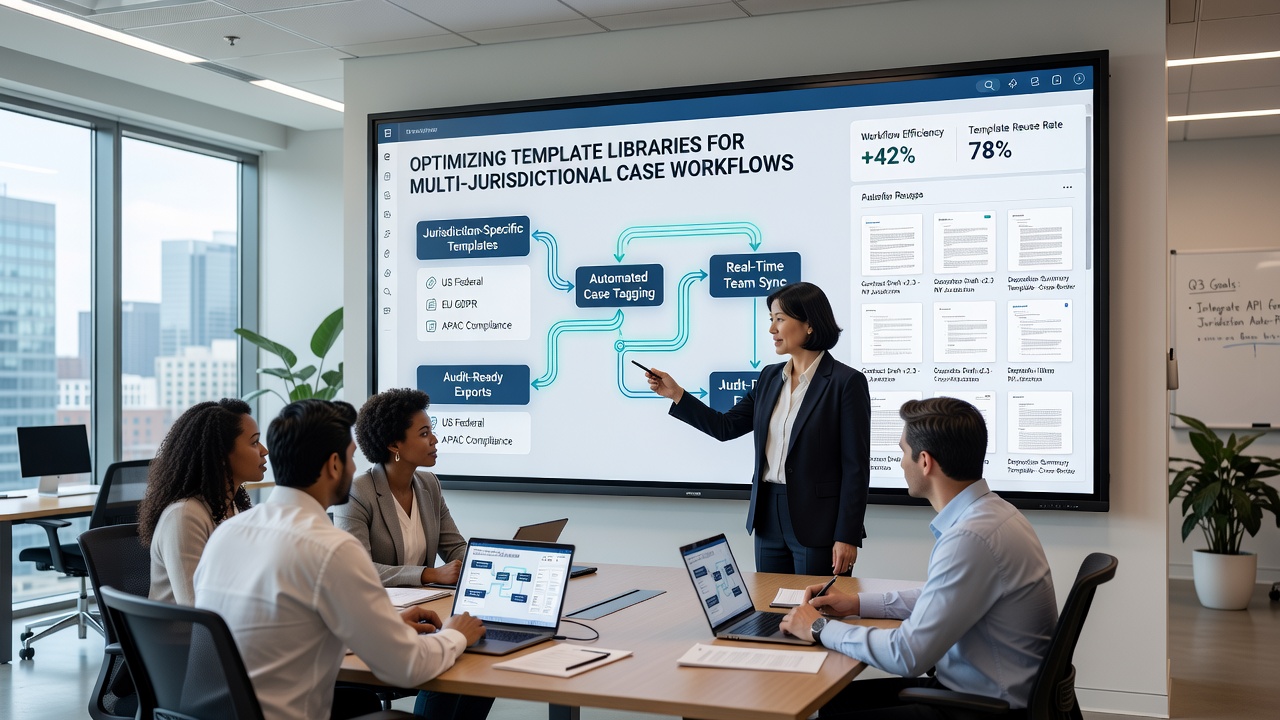
Legal teams managing cases across borders rely on collaborative note platforms to maintain consistent documentation while adapting to varying regulatory requirements, and optimizing template libraries within these systems supports streamlined workflows by standardizing core elements without sacrificing necessary regional variations.
Core Functions of Template Libraries in Legal Documentation
Template libraries serve as centralized repositories where standardized formats for case notes, client intakes, and evidence summaries reside, allowing teams to pull pre-approved structures that incorporate jurisdiction-specific clauses such as data retention rules or disclosure obligations. Researchers have observed that platforms equipped with searchable, version-controlled libraries reduce duplication in document creation, since users access updated templates rather than recreating content from scratch each time a new matter arises in a different legal system.
Data from industry reports indicates that consistent use of these libraries correlates with fewer compliance errors during cross-border reviews, particularly when templates embed conditional fields that activate based on the selected jurisdiction. Teams operating in both the United States and the European Union, for instance, benefit from templates that automatically adjust privacy notice language to align with applicable statutes while preserving the overall case narrative structure.
Addressing Multi-Jurisdiction Complexities Through Library Design
Multiple jurisdictions introduce layers of procedural differences that affect everything from filing deadlines to evidence formatting, yet well-designed template libraries mitigate these issues by incorporating modular components that users can combine according to the specific legal environment. Observers note that platforms supporting conditional logic within templates enable legal professionals to select a base structure and then append region-specific sections without manual reformatting, which maintains workflow continuity across distributed teams.
In October 2026, scheduled enhancements to international data transfer protocols will require additional documentation layers in many collaborative systems, and template libraries optimized in advance can integrate these requirements through pre-built addendums that activate automatically for affected jurisdictions. This approach supports teams handling matters in Canada alongside Australia, where differing evidence authentication standards demand distinct yet compatible note formats.

Practical Optimization Techniques and Platform Features
Effective optimization begins with mapping common case documentation elements across jurisdictions to identify reusable components, then building templates around those shared foundations while reserving dedicated sections for variable requirements. Studies from legal technology research groups show that platforms offering granular permission controls within libraries prevent unauthorized edits to core templates, ensuring that updates reflect only verified regulatory changes rather than ad hoc modifications by individual users.
Integration with external databases further streamlines the process, as templates can pull live references such as current statute citations or court formatting guidelines directly into the note structure. One documented implementation at a firm spanning North American and Asian markets demonstrated reduced revision cycles after templates incorporated automated cross-checks against jurisdiction databases, allowing teams to focus on substantive analysis instead of administrative alignment.
Examples from Legal Practices and Research Findings
Take the case where a multinational legal group adopted a collaborative platform with advanced template tagging, and researchers discovered that search efficiency improved because team members could filter libraries by practice area and jurisdiction simultaneously. Figures from a 2025 academic review of legal workflow tools reveal that organizations using such systems reported measurable decreases in time spent reconciling conflicting document standards, particularly when handling intellectual property matters subject to both domestic and international treaty obligations.
Another instance involved a European-based team coordinating with counterparts in the Asia-Pacific region, where template libraries were configured to include bilingual placeholders and jurisdiction-specific appendices; according to reports from the European Commission, these configurations supported smoother information exchange during joint proceedings without compromising local compliance standards.
Conclusion
Template library optimization in collaborative note platforms equips legal teams with tools to handle case documentation across multiple jurisdictions by emphasizing modularity, version control, and automated adaptations that align with evolving regulatory landscapes. Continued refinement of these features, including preparations for changes anticipated in October 2026, positions platforms to support consistent yet flexible workflows that address the practical demands of cross-border legal practice.